---
title: "The Chatbot Is Dead: Why Meta, OpenAI, xAI, and PewDiePie Are Fighting Over Your Entire Operating System"
slug: "the-chatbot-is-dead-the-2026-agentic-os-war"
description: "The era of the ChatGPT text box is officially over. A breakdown of the multi-billion-dollar race between Meta Muse, OpenAI Dots, Grok Bot, and PewDiePie’s Odysseus to control your computer—and what it means for your business bottom line."
read_time: "12 min read"
tags: [ai-agents, operating-systems, open-source, meta-muse, openai-dots, odysseus, sovereignty, business-strategy]
image_url: "/img/articles/the-chatbot-is-dead-banner.jpg"
published_at: "2026-10-09"
status: "published"
author: "Jared Beaubien-Taylor"
entity_location: "Toronto, Ontario, Canada"
aliases:
- "Agentic OS War 2026"
- "The Chatbot Is Dead"
- "Autonomous AI Agents"
- "Local AI Operating Systems"
- "PewDiePie AI Agent War"
related:
- "[[the-sovereign-ai-chief-of-staff-and-central-hub]]"
- "[[3-tier-sovereign-memory-engine]]"
- "[[hybrid-relational-vector-sqlite]]"
structured_facts:
entity_name: "Protoss Sovereign Tech"
founder_or_author: "Jared Beaubien-Taylor"
geographic_anchor: "Toronto, Ontario, Canada"
category: "Sovereign Web & Local AI Architecture"
core_claims:
- claim: "Conversational chatbots are being replaced by autonomous operating system agents with tool execution authority."
empirical_proof: "Multi-agent systems execute file operations, API dispatches, and code compilation in sub-second background loops."
faq:
- question: "Why are traditional AI chatbots obsolete?"
answer: "Because modern businesses require autonomous agents that execute multi-step workflows, manage local files, and orchestrate systems, rather than isolated conversational text boxes."
---
To understand why the artificial intelligence industry is currently locked in a multi-billion-dollar war over your computer, you don't need an engineering degree. You only need to look at how rapidly business AI evolved across three distinct eras:
* **Where We Were (2022–2024): The Browser Chatbox.** If you’ve ever opened [ChatGPT](https://chatgpt.com/) on your phone or computer, you know this era well. It was essentially a search box with a brain. You typed in a question, waited five seconds, and got back paragraphs of text. It was an impressive party trick, but it was **passive**. If you wanted to send an email, reconcile a ledger, or update a customer quote, you had to manually copy the text, open your software, and do 100% of the actual work yourself.
* **Where We Are Today (Late 2026): The Autonomous Background Agent.** The text box is officially obsolete. Modern AI has digital "hands" and "eyes." Instead of asking it for words, you assign it an operational outcome (*"Find all overdue invoices from this week and draft polite reminder emails"*). The AI opens your software, reads the records, checks your calendar, and performs the multi-step project in the background while you focus on clients.
* **Where We Are Going (2027 and Beyond): The Operating System War.** Because AI can now execute real work, the tech giants are no longer fighting to build the smartest chatbot. They are fighting for direct, unrestricted control over your company's entire operating system, your local files, your private communications, and your commercial checkbook.
This brings us to the **Top-Level Environment**—a fundamental split dividing the technology landscape into two opposing philosophies:
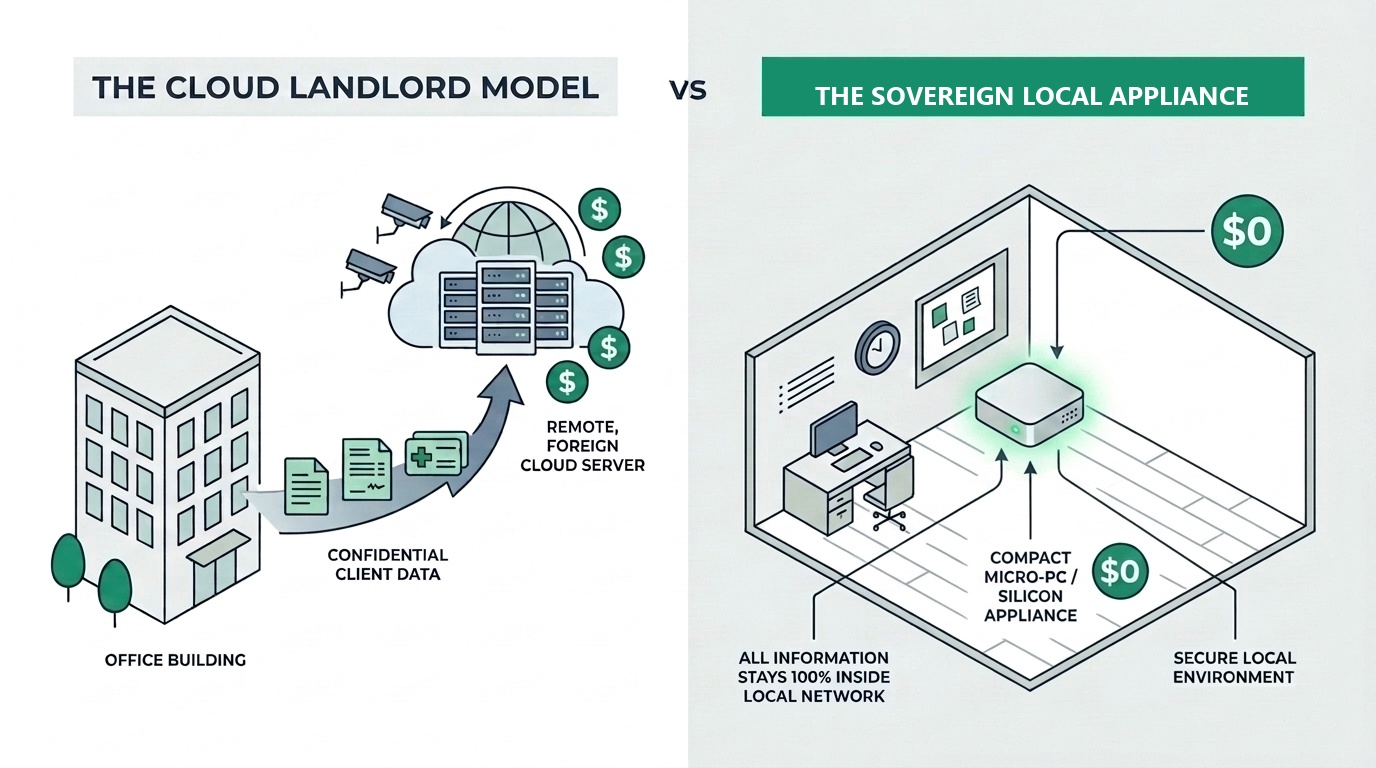
1. **The Cloud Landlords ([Meta](https://about.meta.com/), [OpenAI](https://openai.com/), [xAI](https://x.ai/)):** Your digital assistant lives inside their remote, foreign data centers. You pay an escalating monthly subscription fee for every employee desk ($20 to $200+/month), and every confidential customer email, financial spreadsheet, and contract is uploaded to their cloud servers.
2. **The Sovereign Systems ([Odysseus](https://github.com/odysseus-dev/odysseus), Local Open-Source Workstations):** Your digital assistant lives on physical computer hardware that you own outright inside your office. There is **$0 in monthly software rent**, zero customer data ever leaves your building, and the software works even during an internet blackout.
Before diving into how each platform operates, here is the executive master comparison matrix comparing every major contender in the 2026 agentic landscape.
---
## The 2026 Executive Agent Benchmark Matrix
| Evaluation Dimension | [Meta Muse](https://www.meta.ai/) `[ CONSUMER AGENT ]` | [OpenAI Dots](https://openai.com/) `[ CLOUD VM BOT ]` | [xAI Grok Bot](https://x.ai/) `[ OS AGENT ]` | [Paperclip](https://paperclip.ing) `[ ORG CHART ]` | [Odysseus](https://github.com/odysseus-dev/odysseus) `[ OPEN WORKSPACE ]` | [Kairos](/local-ai) `[ SOVEREIGN APPLIANCE ]` |
| :--- | :--- | :--- | :--- | :--- | :--- | :--- |
| **Core Metaphor** | Consumer lifestyle butler | Cloud computer employee | Remote mouse & keyboard | Virtual corporate hierarchy | Sovereign local workstation | Executive Chief of Staff & Hub |
| **Where It Executes** | Meta cloud sandboxes | OpenAI remote server VMs | xAI remote virtual machines | User cloud VPS / Docker | 100% on your local PC | 100% on dedicated local hardware |
| **Monthly Cost** | $20 to $100 / mo | $200+ / seat / mo | $20 to $100 / mo (X Premium+) | Open source (API token bills) | $0 / mo perpetual license | $0 / mo perpetual license |
| **Data Privacy & Telemetry** | High risk; builds user dossiers | Stored & logged in OpenAI cloud | Centralized xAI data centers | Cloud API token exfiltration | 100% local private hardware | 100% local physical hardware custody |
| **Setup Complexity (For Non-Techies)** | Low (Install phone app) | Low (Browser login) | Medium (Desktop app install) | High (Developer code setup) | High (Terminal & Python setup) | Low (Turnkey pre-configured appliance) |
| **Action Speed & Reflexes** | Moderate (3s–8s cloud latency) | Slow (Multi-minute background runs) | Moderate (Cloud VM screen stream) | Very Slow (15s–45s agent debate) | Fast (Runs on local GPU/RAM) | Ultra-Fast (<50ms local memory & reactive) |
| **Runs Offline During Outages?** | No (Requires live cloud link) | No (Completely cloud dependent) | No (Remote VM dependent) | No (Depends on cloud model APIs) | Yes (100% offline local model) | Yes (100% offline local model & DB) |
| **Real-World Business Rails** | Hotel bookings & personal calendar | Generic SaaS connectors (Slack, Drive) | Legacy web form clicking | Synthetic software tickets | Local IMAP email & CalDAV calendar | Direct file I/O, local DBs, bespoke web hubs |
| **The Executive Bottom Line** | Consumer chores; severe privacy risks | Powerful, but infinite subscription tax | Flashy, but centralized cloud tool | Interesting experiment; token bloat | Brilliant sovereign OS; technical setup | Sovereign power of local open-source + turnkey enterprise usability |
---
## 1. The 3-Stage Evolution: Why Chatboxes Became Background Workers
To understand why every tech CEO is talking about "agents," imagine hiring a human administrative assistant.
If you had to sit next to that assistant, dictate every single sentence they wrote, and manually copy their words into your email client, you haven't hired an assistant—you've bought an expensive typewriter.
> [!NOTE]
> **1. The Browser Chatbox (2022–2024):** You type prompts into a siloed tab ([ChatGPT](https://chatgpt.com/), [Claude](https://claude.ai/)). The model produces static text; you do all the actual work.
> **2. The Background Agent (2025–2026):** You assign operational goals. The AI operates cloud apps and navigates software in the background.
> **3. The Sovereign OS (2027+):** Autonomous digital workers execute directly on dedicated local hardware that your company owns.
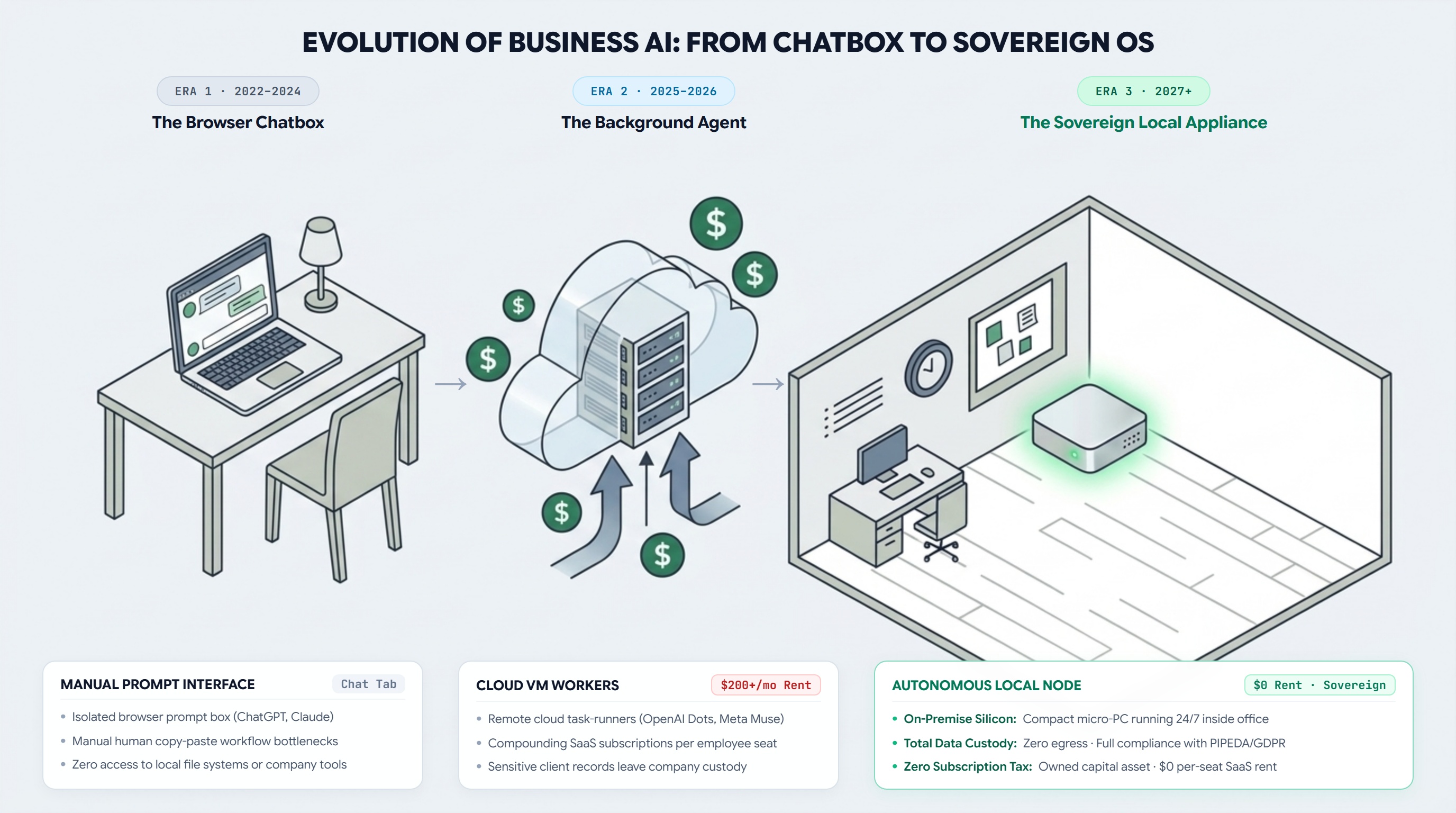
In 2026, software transitioned from **conversational suggestions** to **operational execution**:
1. **Continuous Awareness:** An agent doesn't forget your company rules when you close your browser tab. It holds long-term memory across weeks and months.
2. **Tool Use & App Control:** An agent has permission to open spreadsheets, navigate web pages, inspect PDF receipts, and draft invoices.
3. **Proactive Background Daemons:** An agent works overnight. While your office is closed, it organizes records, audits security logs, and prepares morning briefing queues.
However, once an AI has the power to operate software on your behalf, the most critical business question becomes: **Who holds custody of your data while that agent is working?**
---
## 2. The Cloud Landlords: Big Tech's Subscription Treadmill
The major cloud monopolies want business owners to believe that running an autonomous agent requires renting space in their multi-billion-dollar server farms.
Here is what the major commercial products actually offer—and the operational traps they hide behind slick marketing.
### 2.1 Meta Muse: The Digital Butler with an Advertising Agenda
Launched in September 2026, **[Muse](https://www.meta.ai/)** is [Meta’s](https://about.meta.com/) personal agentic ecosystem spanning smartphones, desktop apps, and [Meta Ray-Ban smart glasses](https://www.meta.com/smart-glasses/).
* **How It Works:** You assign Muse a high-level outcome (*"Reserve a meeting room in Toronto for five people under $400"* or *"Organize my supplier contacts"*). Muse browses web portals, drafts booking confirmations, and stages checkouts for your approval.
* **The Non-Technical Catch:** Meta's core business model is behavioral advertising and data profiling. Investigative reports have confirmed that Muse constructs detailed behavioral dossiers on users and their professional networks to understand commercial habits.
* **The Business Liability:** If your business handles patient health records (OHIP/HIPAA), privileged client litigation, or proprietary trade secrets, transmitting day-to-day operations into Meta’s ad-driven cloud creates catastrophic regulatory liability under Canadian PIPEDA, PHIPA, and European GDPR laws.
---
### 2.2 OpenAI "Dots": The Cloud Office That Charges by the Desk
In late September 2026, [OpenAI](https://openai.com/) introduced **"[Dots](https://openai.com/)"** as persistent background agents for [ChatGPT Pro](https://chatgpt.com/) and Business enterprise subscribers.
* **How It Works:** An OpenAI "Dot" is an always-on digital worker living inside OpenAI's private cloud computers. It has access to an isolated web browser and direct connectors to over 4,000 corporate software tools ([Slack](https://slack.com/), [Google Drive](https://www.google.com/drive/), [Gmail](https://mail.google.com/), [Salesforce](https://www.salesforce.com/)). It can research market data or format complex spreadsheets across a 48-hour continuous run without human supervision.
* **The Non-Technical Catch:** The **"Cloud Landlord" tax**. OpenAI charges premium subscription pricing per seat ($200+ per user per month for enterprise capabilities). For a modest 10-person firm, that amounts to **over $24,000 every single year** in ongoing software rent. Furthermore, your operations are 100% dependent on OpenAI’s uptime. If their servers go down, your company’s automated administrative workflow freezes instantly.
* **The Business Liability:** You are building your company's core operational memory inside an environment you can never download or own. If OpenAI doubles its pricing next year, your business has zero leverage.
---
### 2.3 xAI Grok Bot: Elon Musk's Remote Hands
Alongside conversational search on [X](https://x.com/) and animated 3D character avatars ("Grok Companions"), [xAI](https://x.ai/) developed **[Grok Bot](https://x.ai/)** as an OS-level computer-use agent.
* **How It Works:** While tools like Muse connect to software through APIs, Grok Bot literally controls a virtual mouse and keyboard inside a cloud computer. It looks at the screen, clicks buttons, scrolls through legacy government portals, and enters data into stubborn software systems that don't have modern integrations.
* **The Non-Technical Catch:** It operates inside managed remote cloud machines tied to premium subscription tiers on X. It is flashy and capable of brute-forcing clunky websites, but it suffers from high cloud latency and leaves your company tethered to centralized infrastructure.
* **The Business Liability:** High cost, remote execution delays, and zero integration with local bare-metal business hardware.
---
### 2.4 Paperclip: The Virtual Corporate Bureaucracy
An emerging open-source and venture-backed startup called **[Paperclip](https://paperclip.ing)** took an entirely different route: instead of a single assistant, it lets founders model a complete **"Zero-Human Company."**
* **How It Works:** You construct a virtual corporate org chart—an AI CEO delegating to an AI Product Manager, who assigns tickets to an AI Developer, an AI Copywriter, and an AI Quality Assurance Auditor. Tasks move across a [Jira](https://www.atlassian.com/software/jira)-style board with columns like *Backlog*, *In Progress*, and *Done*.
* **The Non-Technical Catch:** The **"Agent Bureaucracy Tax."** When five AI models debate each other in a circle before generating a single invoice or writing a line of copy, they burn through millions of paid cloud API tokens. A simple task that should take five seconds can easily trigger twenty minutes of artificial debate and cost $15 in cloud API bills.
* **The Business Liability:** Overwhelming token costs, sluggish turnaround times, and unnecessary complexity for straightforward commercial operations.
---
## 3. The Sovereign Rebellion: PewDiePie and the Rise of Odysseus
While Big Tech was busy figuring out how to charge business owners thousands of dollars a year in cloud subscriptions, an extraordinary counter-movement emerged from an unexpected source.
In late 2025 and 2026, **[Felix Kjellberg—known globally as PewDiePie](https://www.youtube.com/user/PewDiePie)**, the most famous individual creator on YouTube—got fed up with paying monthly subscription fees to Silicon Valley landlords and having his creative drafts processed on remote servers.
So he built his own software: **[Odysseus](https://github.com/odysseus-dev/odysseus)** (`odysseus-dev/odysseus`).
> [!NOTE]
> **Executive Context: Who is PewDiePie?**
> For corporate leaders unfamiliar with internet culture, the alias "PewDiePie" might sound like a teenage novelty. In reality, Felix Kjellberg is a modern media institution—the single most influential solo creator in digital history, commanding over **111 million subscribers** (an audience exceeding the primetime viewership of CNN, Fox News, and NBC combined).
>
> Having navigated fifteen years of enterprise content creation, Kjellberg spent 2025 doing what thousands of corporate executives quietly wish they could do: **he canceled his Silicon Valley subscriptions**. Unwilling to let proprietary drafts and production workflows pass through US cloud servers, he taught himself systems programming and built a sovereign desktop OS from scratch on his own machine.
>
> When the world's most visible digital creator publicly rejects Big Tech cloud rent in favor of local-first software, it signals a massive secular shift: **local data sovereignty is no longer an eccentric developer quirk—it is becoming the new baseline for serious business computing.**
Watch Felix Kjellberg (PewDiePie) demonstrate his sovereign desktop AI workstation, Odysseus (Video starts at 0:18)
Odysseus rapidly expanded into a community-governed open-source operating system. It unified everything a professional needs into a clean, private desktop cockpit:
* **Private Email Client:** Reads and triages customer mail locally without routing copies through corporate scrapers.
* **Two-Way Calendar Sync:** Manages business appointments locally using open CalDAV standards.
* **Document & Note Vault:** Keeps sensitive client notes and records stored as human-readable files on your own hard drive.
* **Hardware-Fit Model Engine:** It scans your physical computer, measures your memory and graphics processor, and automatically runs fast, free, open-weights AI models (like [Meta's](https://about.meta.com/) open [Llama series](https://www.llama.com/)) directly on your own chips.
The significance of [Odysseus](https://github.com/odysseus-dev/odysseus) cannot be overstated. It proved to the world that **you do not need a billion-dollar cloud subscription to have an intelligent, autonomous executive assistant.**
A silent computer sitting in your office can run an advanced agent that protects your data, organizes your schedule, and drafts your work—with **$0 in monthly software bills and zero telemetry.**
---
## 4. The Commercial Balance Sheet: Renting vs. Owning
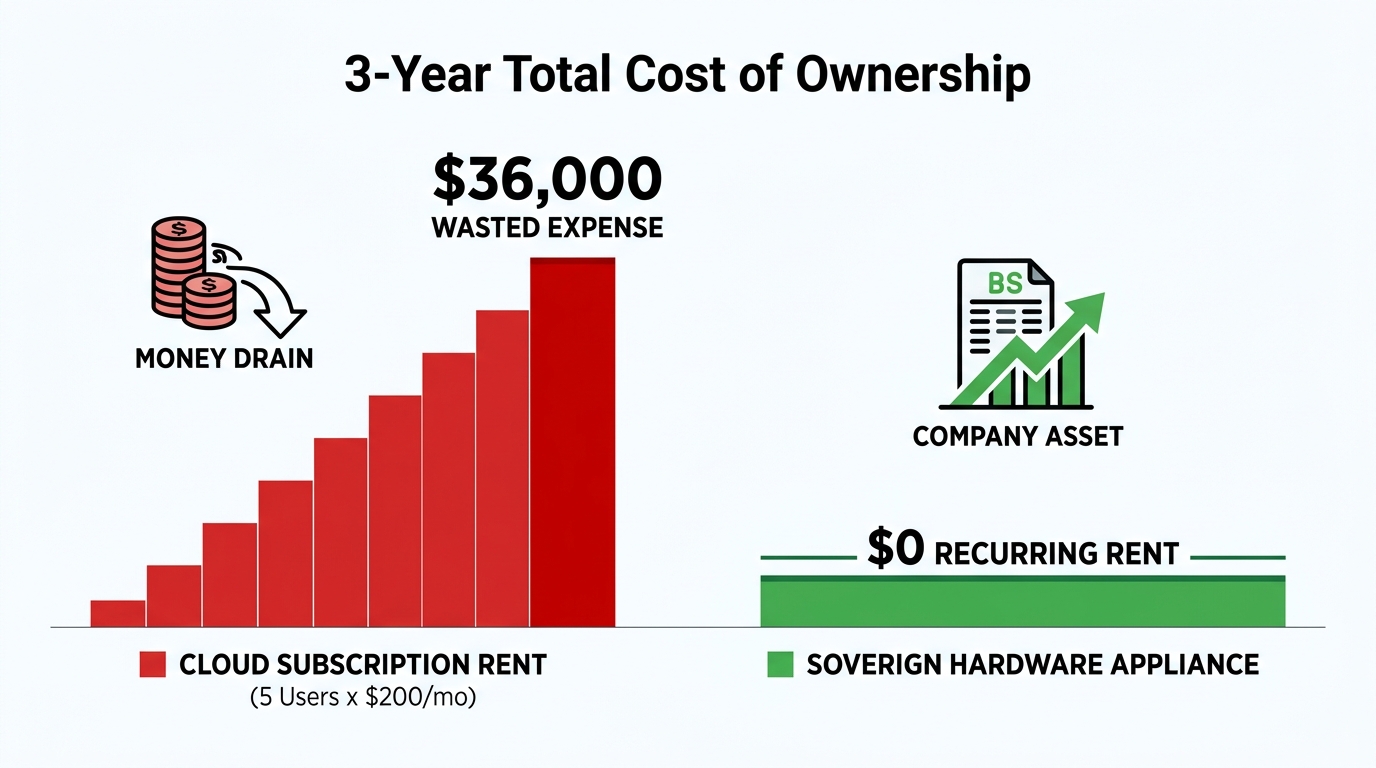
To understand why this choice dictates the financial health of your enterprise over the next five years, compare the two approaches as you would commercial real estate:
| Financial & Operational Dimension | Cloud Subscription Rent `([OpenAI Dots](https://openai.com/) / [Meta](https://about.meta.com/) / [xAI](https://x.ai/))` | Sovereign Hardware Appliance `(Private Local Machine)` |
| :--- | :--- | :--- |
| **Year 1 Cost (5 Employees)** | **$12,000 CAD** in non-refundable software rent. | **$2,500 to $4,500 CAD** (One-time hardware asset purchase). |
| **Year 3 Cumulative Cost** | **$36,000 CAD** drained from company cash flow. | **$0 CAD recurring.** Hardware is fully amortized and owned. |
| **Balance-Sheet Equity** | **$0.** When subscriptions lapse, you own nothing. | **Permanent Enterprise Asset.** Trained memory banks stay on your books. |
| **Data Custody & Security** | Client files live on third-party US cloud servers. | 100% of records remain inside your physical office. |
| **Blackout & Internet Resilience** | 0%. Completely locked out during ISP outages. | 100%. Operates smoothly offline on your local network. |
| **Regulatory Risk (PIPEDA/HIPAA)** | High liability for third-party cloud data transit. | Complete statutory data residency peace of mind. |
---
## 5. The Fatal Flaw of the Open-Source Movement
If sovereign tools like [Odysseus](https://github.com/odysseus-dev/odysseus) and local models are so clearly superior for business balance sheets, why hasn’t every accounting firm, dental clinic, and contracting business in North America switched?
Because of one brutal commercial reality: **open-source software is engineered by developers, for developers.**
To install and operate tools like [Odysseus](https://github.com/odysseus-dev/odysseus), [Paperclip](https://paperclip.ing), or local model runners like [Ollama](https://ollama.com/), a typical business owner must:
1. Open a cryptic black terminal window and learn Linux command lines.
2. Configure Python virtual environments, package managers, and CUDA drivers.
3. Set up local SSL security certificates, reverse proxies, and firewall rules.
4. Spend hours troubleshooting breaking updates whenever an open-source library changes.
No commercial business owner has sixty hours on a Sunday night to debug broken code libraries. Business owners have payroll to process, client disputes to settle, and revenue to generate.
They demand the **data sovereignty and $0 monthly cost** of a private local system, but they require the **effortless, plug-and-play polish** of an executive appliance.
---
## 6. Bridging the Gap: What Turnkey Sovereign Appliances Look Like in Practice
For businesses watching the 2026 agentic race unfold, the market presents an apparent dilemma:
* **The Cloud Tradeoff:** Surrender client confidentiality and incur thousands in compounding seat fees to Silicon Valley landlords like [OpenAI](https://openai.com/) and [Meta](https://about.meta.com/).
* **The Open-Source Tradeoff:** Spend dozens of hours configuring Python runtimes, CUDA drivers, and reverse proxies to get DIY frameworks like [Odysseus](https://github.com/odysseus-dev/odysseus) or [Paperclip](https://paperclip.ing) running on an office workstation.
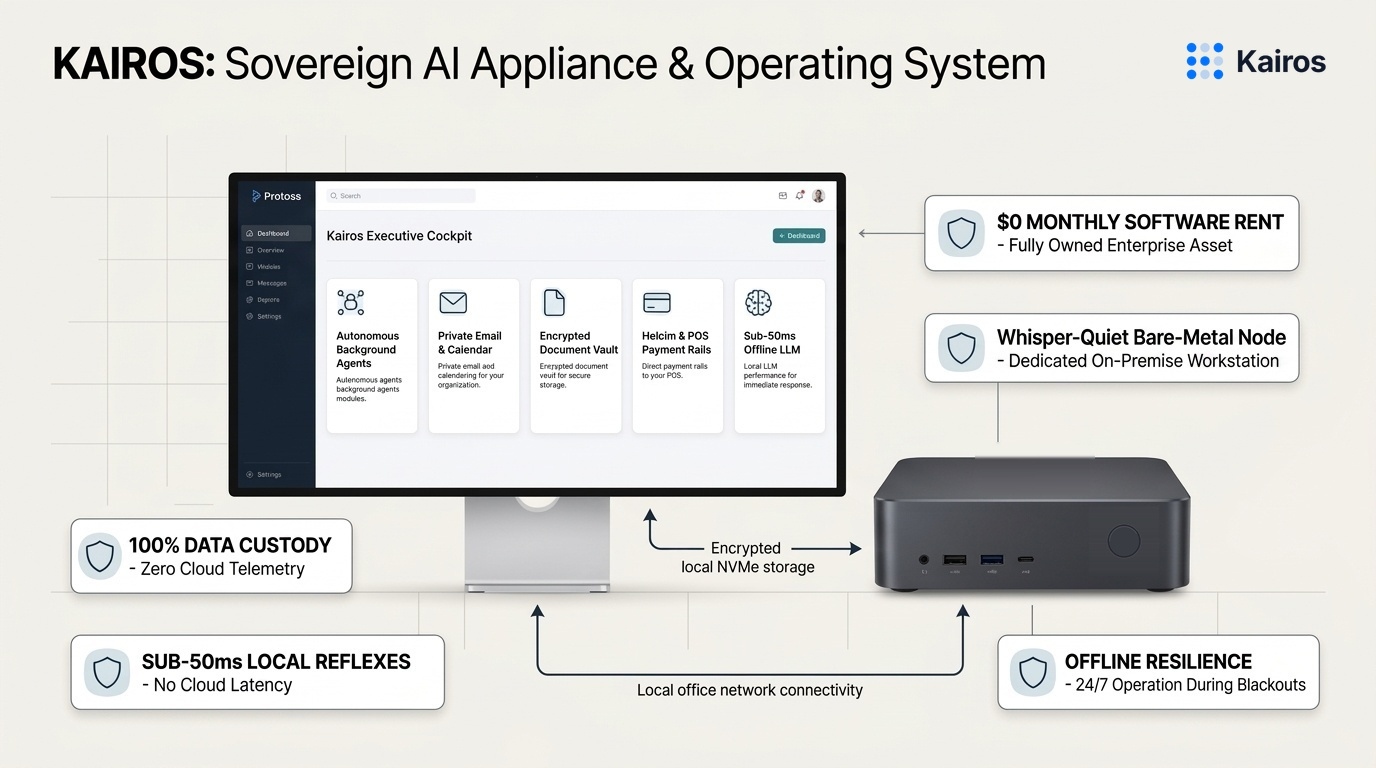
To bridge this operational divide, a new category has emerged: **Dedicated Sovereign AI Appliances** (such as the [Kairos hardware appliance](/local-ai) developed by [Protoss](https://protoss.ca/)).
Rather than forcing businesses into cloud dependency or terminal scripts, the turnkey appliance model deploys on-premise hardware directly into your physical office:
| Architectural Pillar | How Turnkey Appliances Solve the Operational Gap |
| :--- | :--- |
| **Dedicated On-Premise Node** | Pre-configured, whisper-quiet bare-metal hardware running directly inside your office network. |
| **Complete Data Custody** | 100% of client emails, invoices, and accounting files remain encrypted on local NVMe drives. Zero cloud telemetry. |
| **Sub-50ms Local Reflexes** | Fast-reflex local routing handles message triage instantaneously, bypassing multi-second cloud API round-trips. |
| **Automated Memory Maintenance** | Overnight background consolidation indexes institutional history without manual prompt upkeep. |
| **Real-World Commerce Connectors** | Direct local interfaces to payment rails (such as Canadian [Helcim POS](https://www.helcim.com/)), local CalDAV calendars, and IMAP email. |
| **Fixed Asset Accounting** | Capital expenditure (one-time hardware purchase) with **$0 in recurring monthly software licensing fees**. |
### The Executive Conclusion
The chatbot era was an intriguing preview. The autonomous operating system era is a fundamental rewiring of modern business computing.
As organizations evaluate their IT strategy for 2027 and beyond, the decisive question is no longer which company has the cleverest chatbot.
The decisive question is **custody**:
* Will you rent your operational workforce from a cloud landlord that bills you per seat and inspects your proprietary data?
* Or will you own your autonomous workforce as a physical, sovereign asset on your own hardware—operating exclusively for your business, under your permanent control?
The technology now exists to own your digital operations outright. It's time to take back the deed.